Out of Hours Electricians
Fault Finding Electricians in Guildford
Electrics that trip, flicker or cut out are warning you about a fault. We trace the cause using proper testing and fix it.
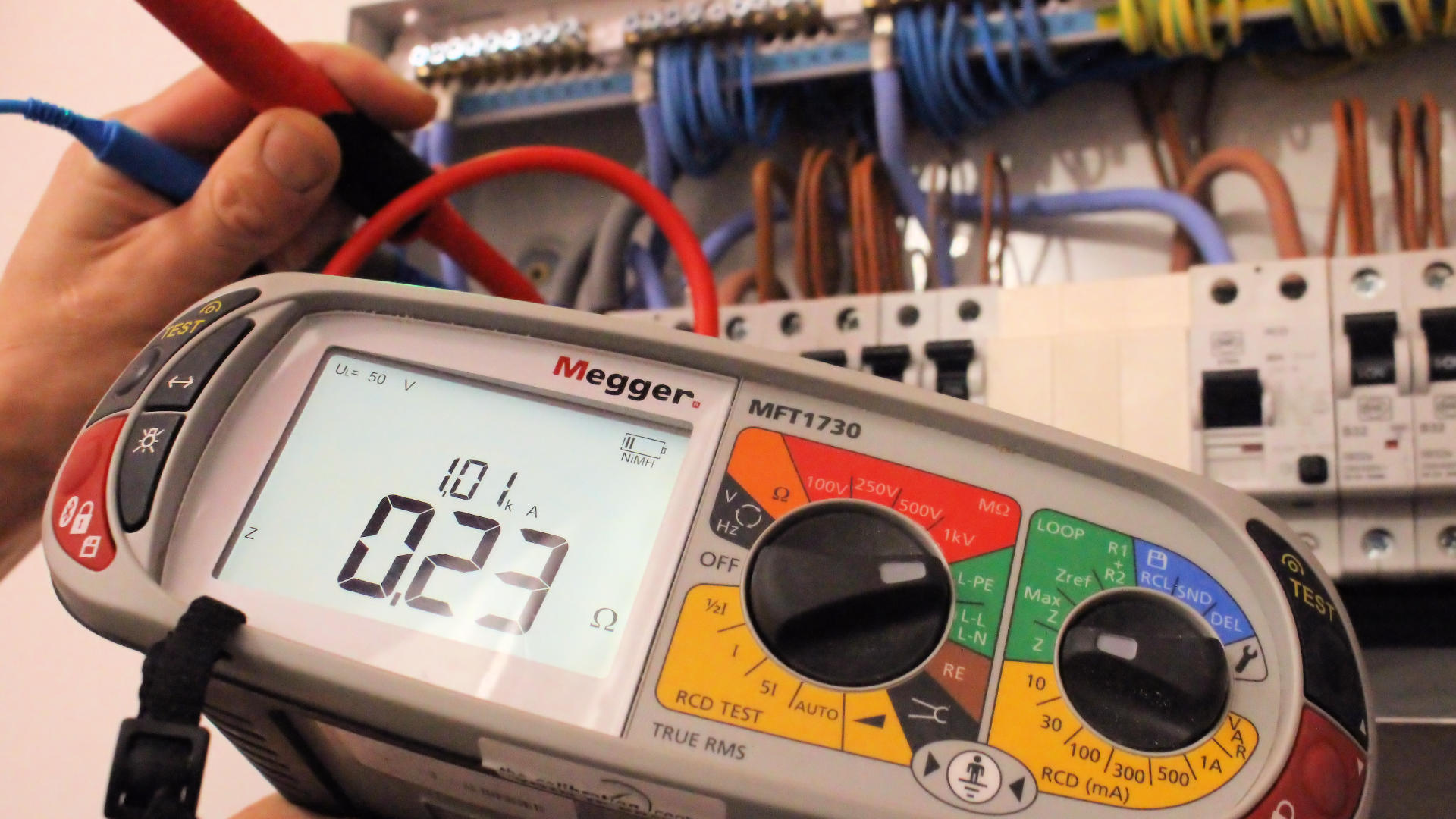
- Proper test equipment used to trace every fault
- Arrival within 30 to 90 minutes
- Most faults put right first time
- Costs made clear before we begin
Common problems
Faults we get to the bottom of
Some faults show themselves. Others are buried in walls, lofts and under floors. These are the ones we're called out for most often.
Circuits that won't stay on
A breaker or RCD that keeps cutting out is reacting to a fault. We work out which circuit is involved and what's behind it.
Sockets and lights with no power
Lost power in one part of the house? We trace where the circuit is broken, be it a loose connection or a damaged cable.
Heat, buzzing and burning smells
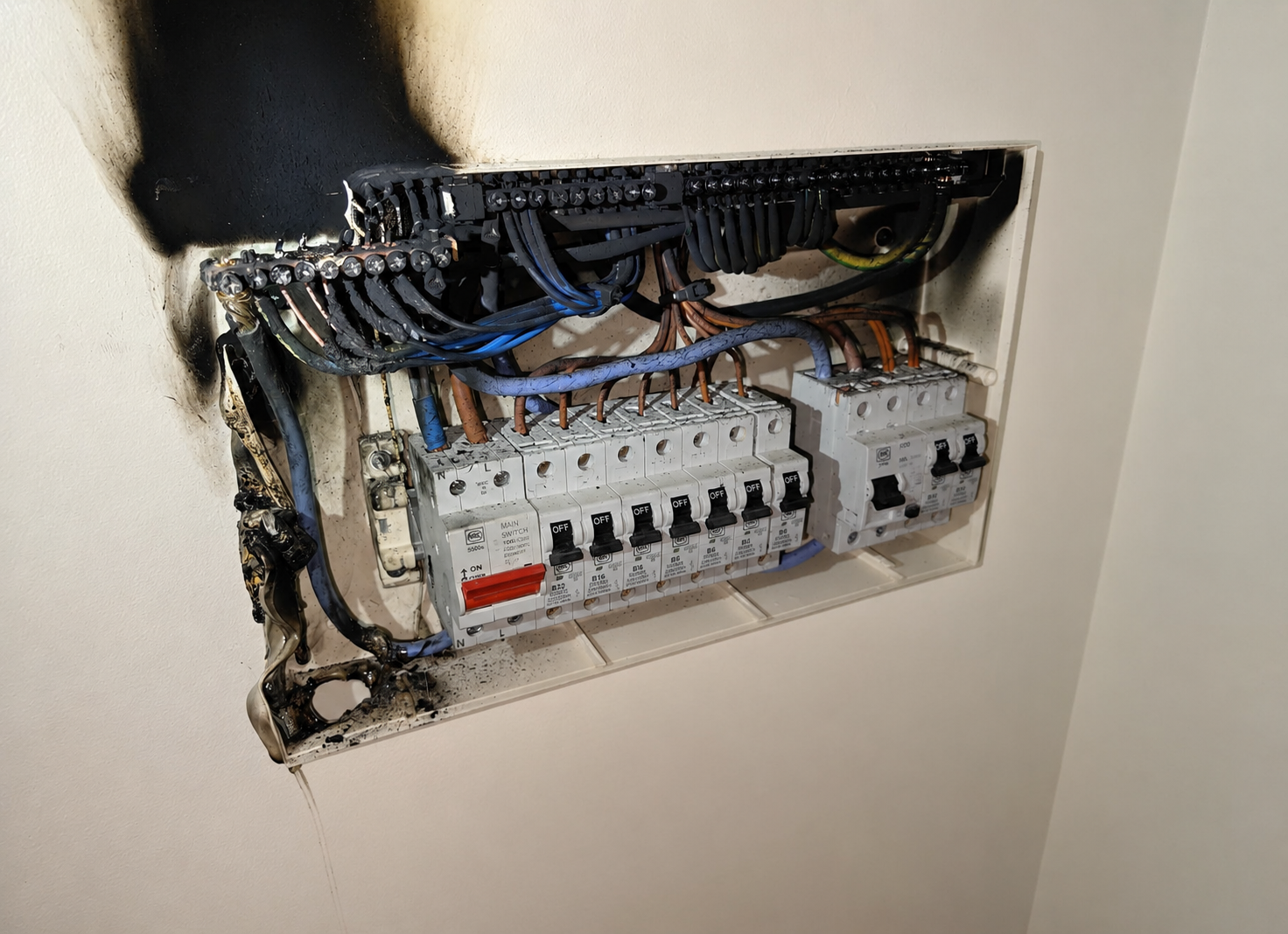
Warm sockets, buzzing switches and scorch marks suggest a poor connection that should be dealt with quickly.
Damp and water-related faults
Leaks and damp can cause trips that come and go. We locate where the moisture is getting in.
Faults that come and go
Problems that appear only occasionally are the trickiest to pin down. We keep testing in a methodical way until we find them.
Garden and outbuilding circuits
Garden lighting, sheds and garages often cause trips, particularly after rain.
Fault finding in detail
How electrical faults are found
Fault finding is a bit like detective work. What you notice, whether a trip, a dead socket or a flicker, is seldom where the real fault sits. This is how we find it.
What's actually happening
Each circuit in your home begins at the fuse board and travels through cables in the walls, floors and ceilings to reach sockets, switches and fittings. A fault could be anywhere along that path: in an accessory, at a junction, in the cable itself, or in an appliance plugged in at the end. When a breaker or RCD trips, it only shows which circuit is affected, not where along it the problem lies.
Some faults are constant and easy to repeat. Others are intermittent and only show up in wet weather, when a certain appliance is running or at particular times of day. Those need methodical testing, not guesswork.
Where faults usually come from
- Insulation breakdownWorn or damaged cable insulation allows current to leak between conductors or to earth. Insulation resistance testing picks it up.
- Loose terminalsA screw that has worked loose in a socket or junction box can lead to intermittent power loss, flickering and heat.
- Neutral-earth faultsIf a neutral touches earth anywhere on a circuit, an RCD will trip, often only when something on that circuit is turned on.
- MoistureDamp in outdoor sockets, garden lighting, bathrooms and lofts creates faults that appear and disappear with the weather.
- Faulty appliancesImmersion heaters, ovens, kettles and washing machines are frequent sources of leakage that trips the RCD.
- Damage from DIY or building workNails, screws or drill bits through hidden cables can cause faults that only show up months afterwards.
How we put it right
First we talk to you. When does it trip, what was switched on, and has anything changed lately? Next we isolate the installation circuit by circuit to confirm where the fault sits. Once the circuit is known, insulation resistance and continuity testing narrow it to a length of cable or an accessory, and a cable tracer follows hidden runs so we avoid opening up walls unnecessarily.
With the fault located, the repair is usually simple: remaking a loose connection, replacing a damaged accessory or section of cable, or isolating a faulty appliance. For intermittent faults we may use an earth leakage clamp to catch the problem as it occurs. Once repaired, we re-test the whole circuit to confirm it's healthy before it's switched back on.
Our approach
How we track a fault down
Locating a fault properly is what makes the repair last.
Listen
You describe what happens and when. Those details often point us the right way.
Isolate
We work through the installation circuit by circuit to establish where the fault is.
Test
We measure the wiring with proper test equipment instead of guessing.
Repair and re-test
We fix the cause, then test once more to confirm the circuit is safe before it's switched back on.
Need an electrician urgently?
Day or night, expect us within 30 to 90 minutes.
Fault tracing
Finding and repairing electrical faults
Electrical fault finding is also called fault tracing, electrical fault repair, or just working out why the trip switch keeps going. Whatever the name, the job is to locate precisely where an electrical fault is and put it right, not to guess.
We attend RCD tripping, fuse boxes that won't reset, sockets with no power, flickering lights, intermittent faults and electrics that trip in the rain. As an emergency electrician in Guildford, we bring the test equipment to find faults on the first visit, day or night.
If you need an electrical fault finder in Guildford, Merrow, Godalming or Woking, or an out of hours electrician to trace a fault that has left you without power, give us a ring and we'll talk you through it.
Need to know
Common questions answered
Why does my power keep tripping out?
Commonly a faulty appliance, an overloaded circuit, moisture in a fitting or damaged wiring. Testing shows us which.
Is it possible to find the fault myself?
You can unplug appliances one by one to rule them out. Don't open up sockets, switches or the fuse board; that's a job for an electrician.
How long will fault finding take?
Straightforward faults can take under an hour. Intermittent or hidden ones take longer, and we'll keep you updated as we work.
Will walls or floors have to be damaged?
Rarely. Testing normally narrows the fault down to a spot we can reach. If we need more access, we'll explain why and ask you first.
Also available